
BestArtCamps.com > How to Choose the Best Art Camp
How to Choose the Best Art Camp
BestArtCamps.com
Version 9.1

Finding the Best Art Camp Begins with Finding the Best Fit
The best summer art camp will not be the same for every child or teen. Some young people may want to strengthen specific skills, others may be excited to explore something completely new, and others may simply be looking for an engaging, social, and memorable summer experience.
That is why choosing a camp is about more than comparing activities or locations. Program focus, age and skill level, teaching style, staff, facilities, safety, schedule, cost, camp setting, and the overall atmosphere can all help determine whether a program feels like the right fit for a particular camper and family.
This guide is designed to help families look beyond the basics, compare different kinds of art camps, ask useful questions, and narrow the possibilities with greater confidence.
Art Camp... Ten Good Reasons: Be sure to check out our new article Top Ten Reasons to Go To Art Camp in 2026-27.
Start with Your Goals
What do you want from your Art camp experience? Before you begin comparing programs, think about what matters most for your camper. Are you looking for skill development, new experiences, a challenge, social growth, confidence building, or simply a fun summer experience?
Many Summer Art Camps for Teens offer advanced, immersive, or even intensive programs. It is always a good idea to ask each camp specifically about the level of instruction, pace, and expectations so you know exactly what kind of experience to expect.
International Art Camp Parents & Campers: There is a special section in our Summer Art Camp Guide with information and advice for international campers and parents who would like to attend a U.S. or Canadian summer art camp. Please read on for more details below.
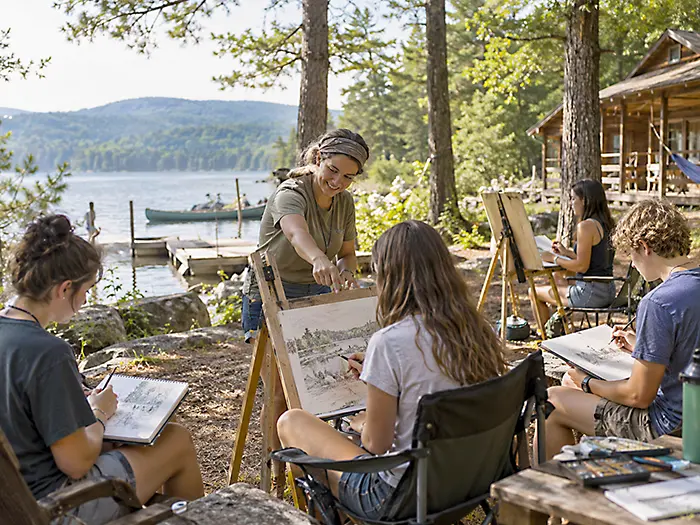
Choose the Kind of Art Camp Experience You Want
Art camps can be very different from one another, so it helps to think first about the kind of creative experience that interests your child or teen. Some programs focus on traditional fine arts and arts and crafts, while others emphasize digital media, animation, design, maker activities, or newer creative technologies.
Traditional art and arts & crafts programs may include drawing, painting, ceramics, sculpture, printmaking, jewelry, sewing, textiles, woodworking, mixed media, and other hands-on studio activities.
Digital and media arts programs may include photography, filmmaking, video production, digital illustration, graphic design, animation, multimedia, and related creative tools.
Maker, STEAM, and creative technology programs may combine art with fabrication, design, electronics, 3D printing, coding, digital production, or other project-based creative experiences. Some newer programs may also explore AI-assisted creative tools when those technologies are part of the camp’s actual curriculum.
Families should also compare programs by age, skill level, and intensity. A beginner may benefit from a camp that encourages experimentation across several art forms, while an older or more experienced teen may prefer advanced instruction, a focused studio experience, or a program that helps develop a portfolio.
Finally, consider the overall camp format. Art programs may be offered as local day camps, overnight camps, destination programs, multi-arts camps, or highly specialized programs focused on one artistic medium.
How to Choose the Best Art Camp
Our new "How to Choose the Best Art Camp" video guide is coming soon. Check back for practical tips on comparing programs, activities, camp settings, schedules, and the experiences that can help make one art camp a better fit than another.

Continue below for more practical tips on researching camps, comparing programs, evaluating staff and facilities, considering costs, and finding the best overall fit.
Research the Camp Carefully
Start with the camp website: Almost every art camp has its own website, or at least a dedicated page on a larger site. You should be able to find useful information there, including camp programs, session dates, location, and contact details. As you read, write down any questions that come to mind so you can follow up later.
Many camps also maintain Facebook or social media pages. These can be useful for photos, updates, testimonials, and a better sense of the camp’s style and community.
Call the camp: Once you have reviewed the website, create a short list of questions that still need answers and try to speak with someone directly. Even in the age of email and live chat, talking with a real person can tell you a lot about the camp’s professionalism, warmth, and responsiveness. If possible, ask whether you can speak with a previous camp parent or camper as a reference.
Camp location: It is easier than ever to explore a camp’s surroundings with Google Maps and other mapping tools. This can help you understand the camp’s setting, nearby services, and the surrounding environment.
Camp weather: Look up the camp’s location and check average summer temperatures, rainfall, storm patterns, and humidity. If your camper has allergies, you may also want to ask about pollen, vegetation, and mold.
Camp history: A long history can be reassuring, but it is not everything. Every great camp had a first season. Look for signs of thoughtful planning, strong leadership, and a good reputation.
Facilities, Staff, and Safety
Camp facilities: Camps vary widely. Some are intentionally rustic and outdoors-focused, while others offer specialized activity spaces, studios, technology, and more comfortable accommodations. Families should think about what kind of environment their camper will both handle well and enjoy.
If you are considering a special interest camp, it is also important to ask about specialized facilities, tools, and equipment used for instruction.
Art camp staff and their experience: Always ask about the experience level of the staff who will work directly with your camper’s age group or program area. In the case of specialized camps, it is helpful to know whether instructors have both subject-matter knowledge and real camp experience.
Camp safety: Ask how the camp handles emergencies, illness, injuries, supervision, and communication with parents. You may also want to ask whether staff are trained in CPR and first aid, and whether a camp nurse or on-call medical professional is available.
Art camp certifications & awards: Ask whether the camp is accredited, whether it has received special recognition, and what certifications staff may hold.
Cost, Scholarships, and Special Situations
Art camp scholarships, financial aid, and camperships: Many camps offer full or partial scholarships, camperships, or other financial aid. These programs are not always highlighted prominently, so it is worth asking directly. In addition, some independent organizations offer summer camp financial assistance.
International Art campers: Many U.S. and Canadian summer art camps now accept international campers and may also employ international staff. Families should ask whether the camp has experience working with international campers, whether any special accommodations are offered, and whether they can speak with parents of previous international campers.
Special needs campers: Many camps now offer programs for special needs campers. Parents should talk in depth with each camp to make sure it offers the right staff, facilities, and program structure for their child’s needs.
Daily Life at Camp
Camp food: Food matters. Ask whether meals are nutritious, how often hot meals are served, and whether the camp can handle allergies, food sensitivities, religious requirements, or other dietary needs.
Special Art camp programs: Unique traditions and special activities often make camps memorable. These might include showcases, family events, performances, field trips, late-night activities, special theme days, or other signature experiences. Ask what makes each camp distinctive.
A typical camp day: Ask what a normal day looks like, including how much time is structured versus flexible, when meals are served, what happens in the evenings, and what weekends are like for overnight campers.
Testimonials, Packing, and Final Questions
Previous camper and camp parent testimonials: Camp websites and social media pages often include testimonials, but these are naturally selective. It is still a good idea to ask whether you can speak with or email a former parent or camper as a reference.
What to bring to summer camp: Always confirm exactly what campers should bring, and what they should leave at home. Most camps provide packing lists on their websites.
For example, some camps now allow eReaders or tablets, while others do not. If digital cameras are allowed, you may want one that also records video and can handle outdoor conditions.
We have put together a collection of useful camp items on our official Art camp store page if you would like to take a look.
Final Thoughts
The best summer art camp is the one that feels like the best fit for a particular child or teen and their family. Taking time to compare programs, ask thoughtful questions, understand the camp environment, and consider what matters most to your family can make the decision easier and the experience more rewarding. For many kids and teens, a well-chosen summer camp can become one of the most memorable parts of the year.
Looking for Other Types of Camps?
Some families exploring art camps may also be interested in related summer programs that combine creativity, performance, academics, or technology.
For a broader overview of camp types and programs, visit our Find Your Camp page to explore more options.
©TheBestCamps.com - ALL RIGHTS RESERVED.
You can go directly to any of our other 2026-27 Special Interest Camp Directories from the list in the black bar at the bottom of this page.
HOME | SUBMIT YOUR CAMP | FIND A CAMP | 2026-27 CAMP GUIDE
Top Ten Reasons to Attend Art Camp

